

Sports lighting
Football pitch lighting
A football pitch is prepared for training, matches or both. The lighting project starts from the uses, dimensions and available columns, before any equipment is discussed.
The starting point
The pitch sets the measure.
Length, width and run-off areas define what has to be covered. Existing columns and their distance from the pitch then decide how the light should be distributed.
- Uses
- Columns
- Neighbours
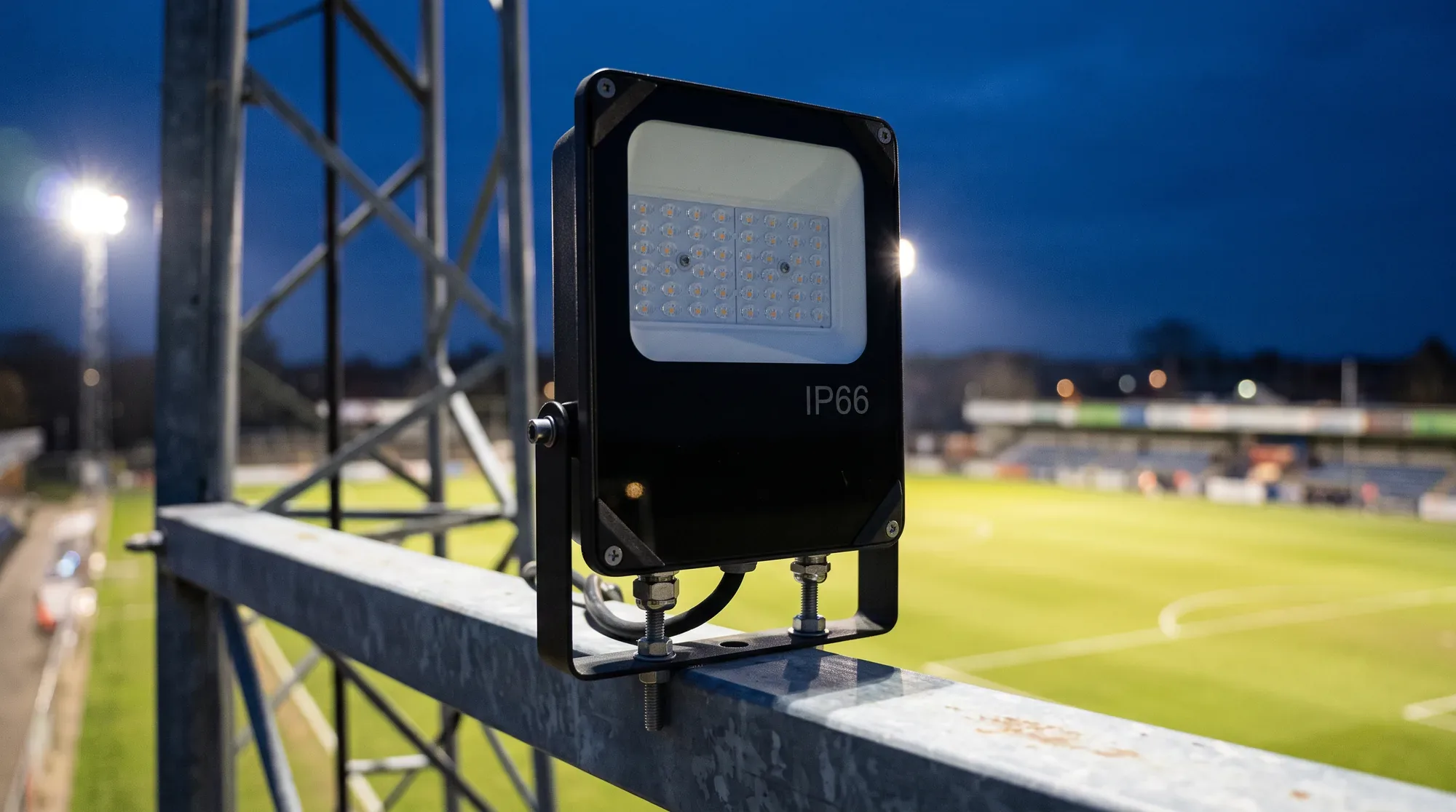
What is lit
Touchlines, goals and run-off areas define the playing area. A 7-a-side pitch and an 11-a-side pitch do not cover the same surface and do not need the same distribution.
The surroundings matter too: accesses, warm-up areas and the immediate neighbourhood. Light spilling onto homes or roads is part of the problem to solve.
What the project decides
The position and height of the columns condition the aiming of the floodlights. A low or close mounting is not treated like corner positions.
The level of play — training, competition, mixed use — and operating hours complete the framework. Maintenance must remain possible without dismantling the installation.
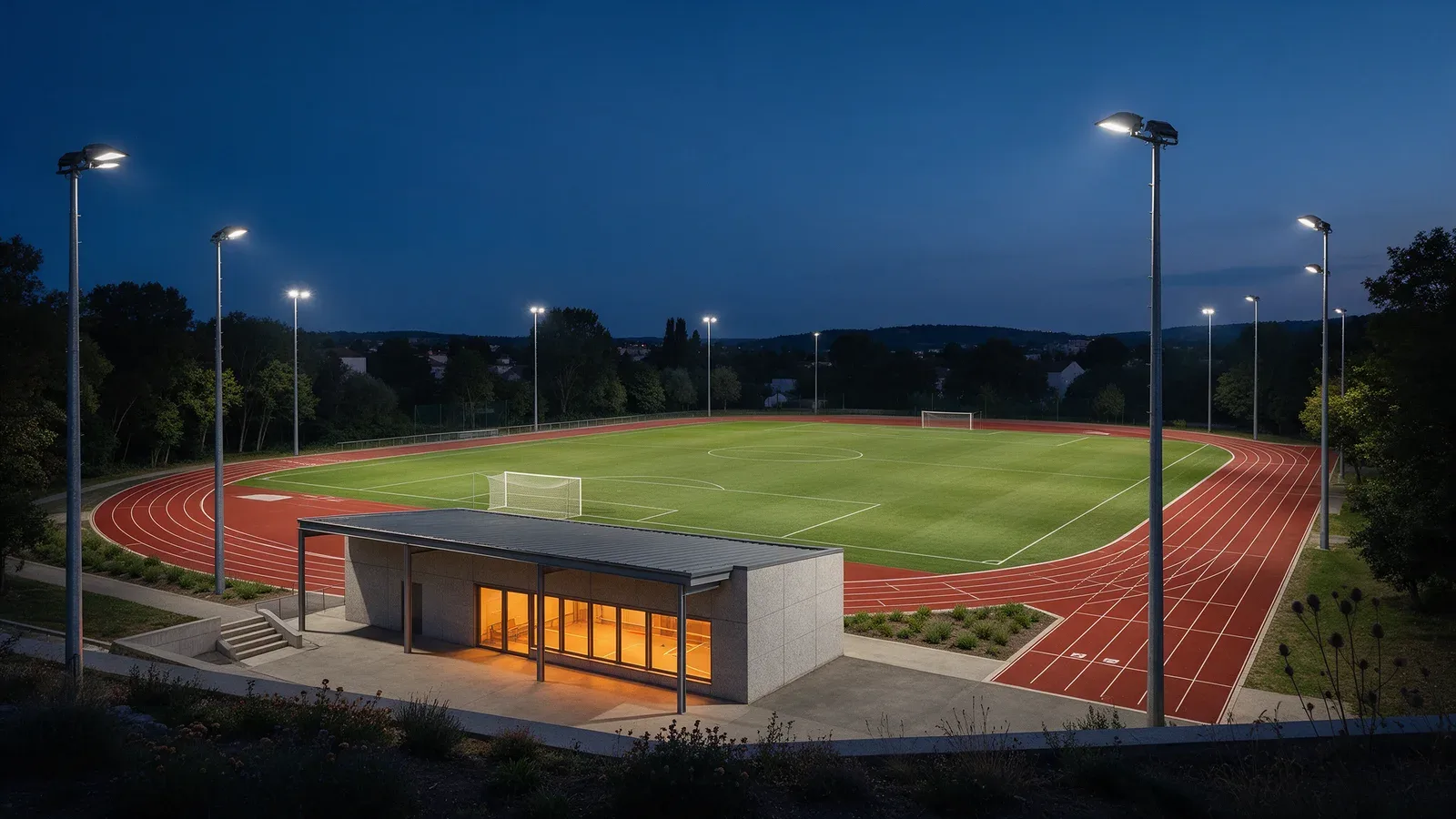
The elevated view brings the pitch, the track and the pavilion together: light is also read in the transitions between them.
Illustrative visualisation
How it is approached
The work starts from the pitch plan, sections and intended uses. Known constraints — columns, network, neighbours, access — are gathered before solutions are compared.
Options are discussed with the project team: mounting, aiming, maintenance and consistency with the rest of the site. The solution is fixed after those exchanges.
What to avoid
- Lighting the centre while forgetting the goals, reusing a column without checking its reach or copying a neighbouring installation without looking at the pitch are fragile decisions.
- An image does not replace a study. Levels, uniformity and limits are checked against the project assumptions.
From the pitch to the catalogue.
Real Tualuce catalogue pages. The selection is defined with the project’s technical team.
Real Tualuce catalogue pages
Explore Tualuce solutionsYour facility. Your project.
Planning a new facility or refurbishment? Gather information about the site, intended uses and existing equipment, then discuss the solutions to explore with Tualuce.
Define the uses
Set out the sports, activities and areas involved.
Gather the site information
Prepare plans, dimensions, existing equipment and known constraints.
Present the project to Tualuce
Share this context with Tualuce to start a professional conversation.
Frequently asked questions
What documents should be gathered before the first conversation?
The pitch plan, its dimensions, column positions and intended uses. Neighbourhood and access constraints usefully complete the brief.
Is a training pitch treated like a competition pitch?
Not in the same way: uses, hours and level of play change the project framework. The solution is defined from those elements.
Can a pitch be lit without existing columns?
It is possible, but column positions then become part of the project. Feasibility depends on the site, the necessary agreements and technical constraints.
From pitch to project
Tualuce brings together the solutions and advice to prepare the lighting for your pitch.
Explore Tualuce solutions