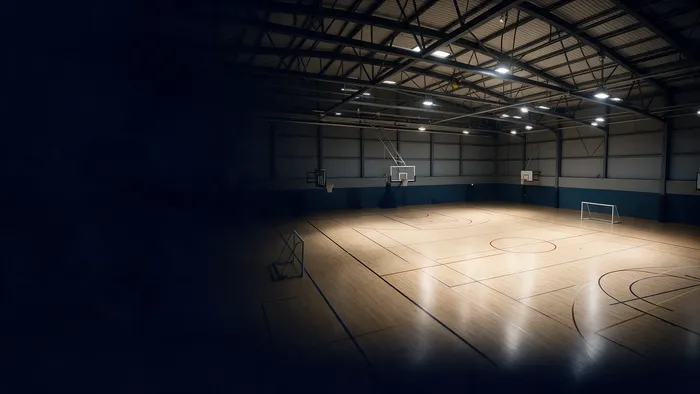
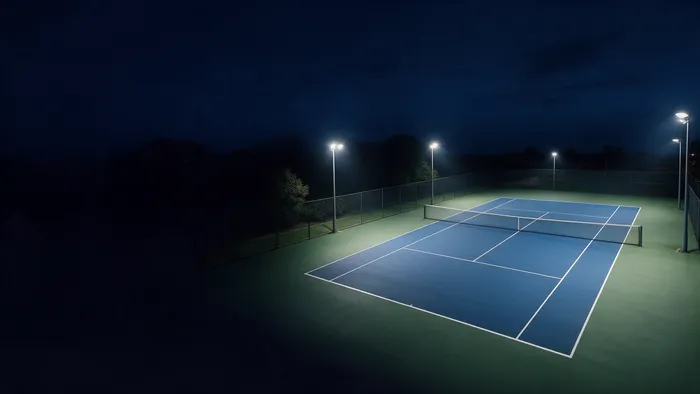
Illustrative night-time view of a floodlit football pitch surrounded by an athletics track.Illustrative night-time view of a floodlit blue tennis court with a central net.Illustrative night-time view of a floodlit padel court enclosed by glass walls.Illustrative view of a lit indoor sports hall with a timber floor, basketball hoops and futsal goals.Illustrative view of an illuminated indoor swimming pool with lane dividers and reflections on the water.Illustrative night-time view of a floodlit bend in a terracotta athletics track.

Lighting foryour sportsfacilities.

For project owners, operators and designers planning lighting for indoor or outdoor sports facilities.

Different sports. Different lighting needs.

Choose a sport

7-a-side and 11-a-side football pitches

From training grounds to match pitches, a lighting project starts with the intended use, the dimensions and the surroundings of the facility.

What to consider

  • Activities and level of play
  • Existing or proposed lighting columns
  • Uniformity and light reaching neighbouring areas
Conceptual layout, not a photometric study

Tennis courts

Following the ball, seeing the back of the court and anticipating changes of direction: lighting needs to consider the whole playing area.

What to consider

  • Indoor or outdoor court
  • Player positions and glare
  • Playing surface and run-off areas
Conceptual layout, not a photometric study

Padel courts

Fast-paced play takes place within glass walls. Their presence is one of the constraints to consider from the outset of the lighting project.

What to consider

  • Available structure and mounting height
  • Reflections on glass walls
  • Lighting across the whole court
Conceptual layout, not a photometric study

Futsal and basketball

A sports hall may accommodate several disciplines. Its lighting design needs to consider those uses, the building height and different viewing directions.

What to consider

  • Futsal, basketball or multi-sport use
  • Luminaire height and positioning
  • Visual comfort for players and staff
Conceptual layout, not a photometric study

Indoor swimming pools

Water, reflections and humidity create particular constraints. Luminaires and their placement need to be specified for this environment.

What to consider

  • Reflections on the water surface
  • Humid conditions and maintenance
  • Visibility across the pool and walkways
Conceptual layout, not a photometric study

Athletics tracks and activity areas

The track, its bends and individual activity areas form an extensive site. The project connects those spaces while considering their uses and surroundings.

What to consider

  • Disciplines and areas in use
  • Lighting continuity around the track
  • Column positions and site surroundings
Conceptual layout, not a photometric study

Outdoor or indoor: the site sets the project framework.

Illustrative visualisation of an outdoor sports facility lit at night.
Illustrative visualisation — not a completed project or a photometric study.

Outdoor

Open-air pitches and tracks

An outdoor site needs to be read through its dimensions, surroundings and intended uses. Existing or proposed mounting positions are among the first details to share.

  • Pitch dimensions and run-off areas
  • Neighbouring areas, orientation and surroundings
  • Existing or proposed lighting columns
Illustrative visualisation of a lit indoor sports space.
Illustrative visualisation — not a completed project or a photometric study.

Indoor

Sports halls, gyms and indoor pools

Indoors, building height, surfaces and viewing directions shape the study. For refurbishment, existing equipment completes the context to review.

  • Building height and structure
  • Surfaces, reflections and humidity
  • Existing equipment and maintenance

A process connecting site, study and use.

A sports lighting project moves through connected stages: define the context, study the light, look from the playing area, then compare operating choices.

A tailored project

A new pitch, an indoor hall or a renovation starts with the way the place will be used. Sports, dimensions and the existing installation shape the brief.

Plans, site constraints and operating priorities then give the lighting study a clear starting point. The proposed approach is built around this project, rather than applied unchanged from another site.

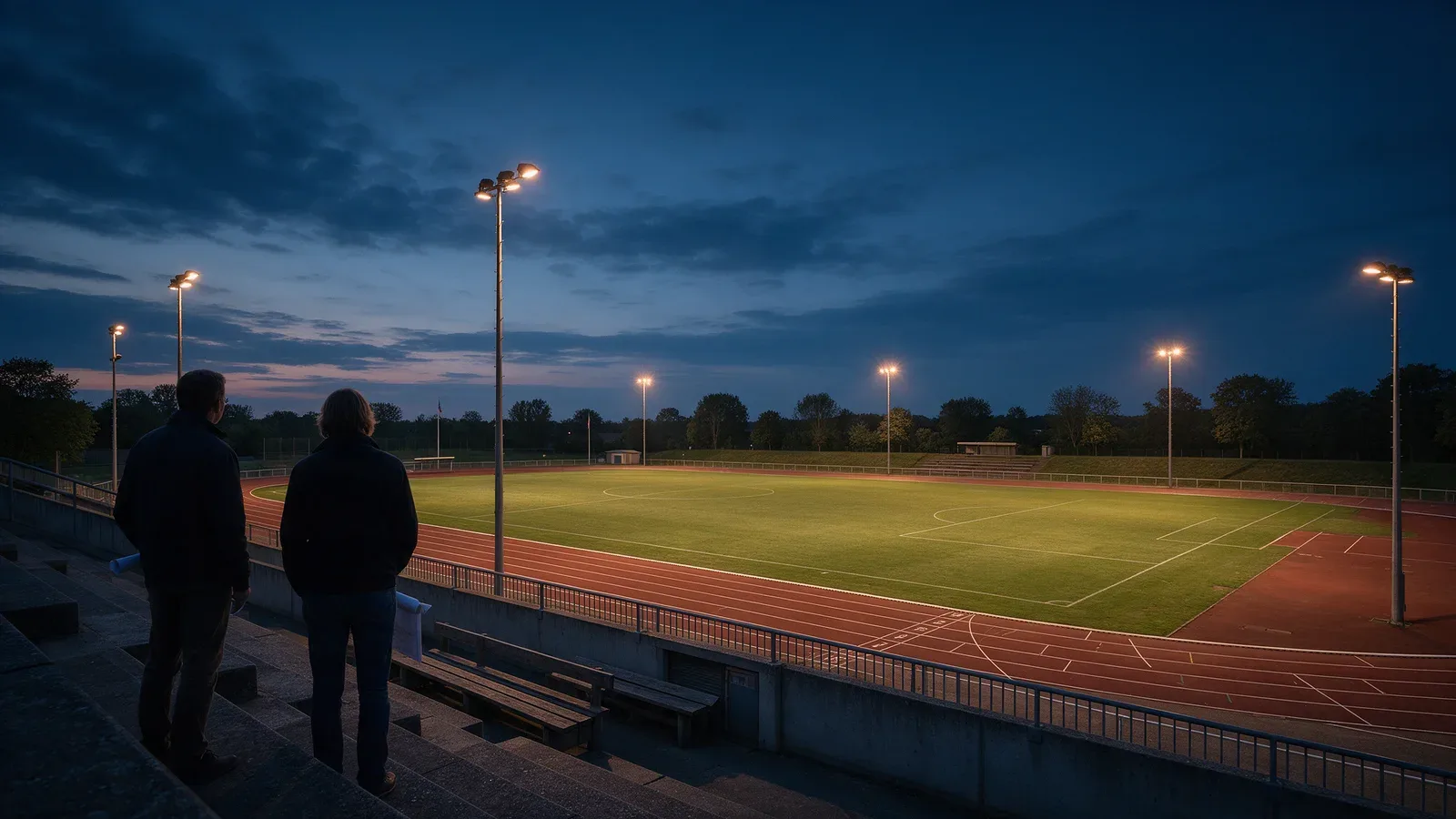
Professionals gathered beside a sports field at blue hour, looking across the site and its equipment.
Illustrative visualisation — not a completed project or a photometric study.

Lighting study

The study translates that brief into lighting choices: where to place the luminaires, how to orient them and how to distribute light across the playing area.

Uniformity, viewing angles and light reaching neighbouring areas are considered together. These checks provide the basis for comparing suitable options before the installation is defined.

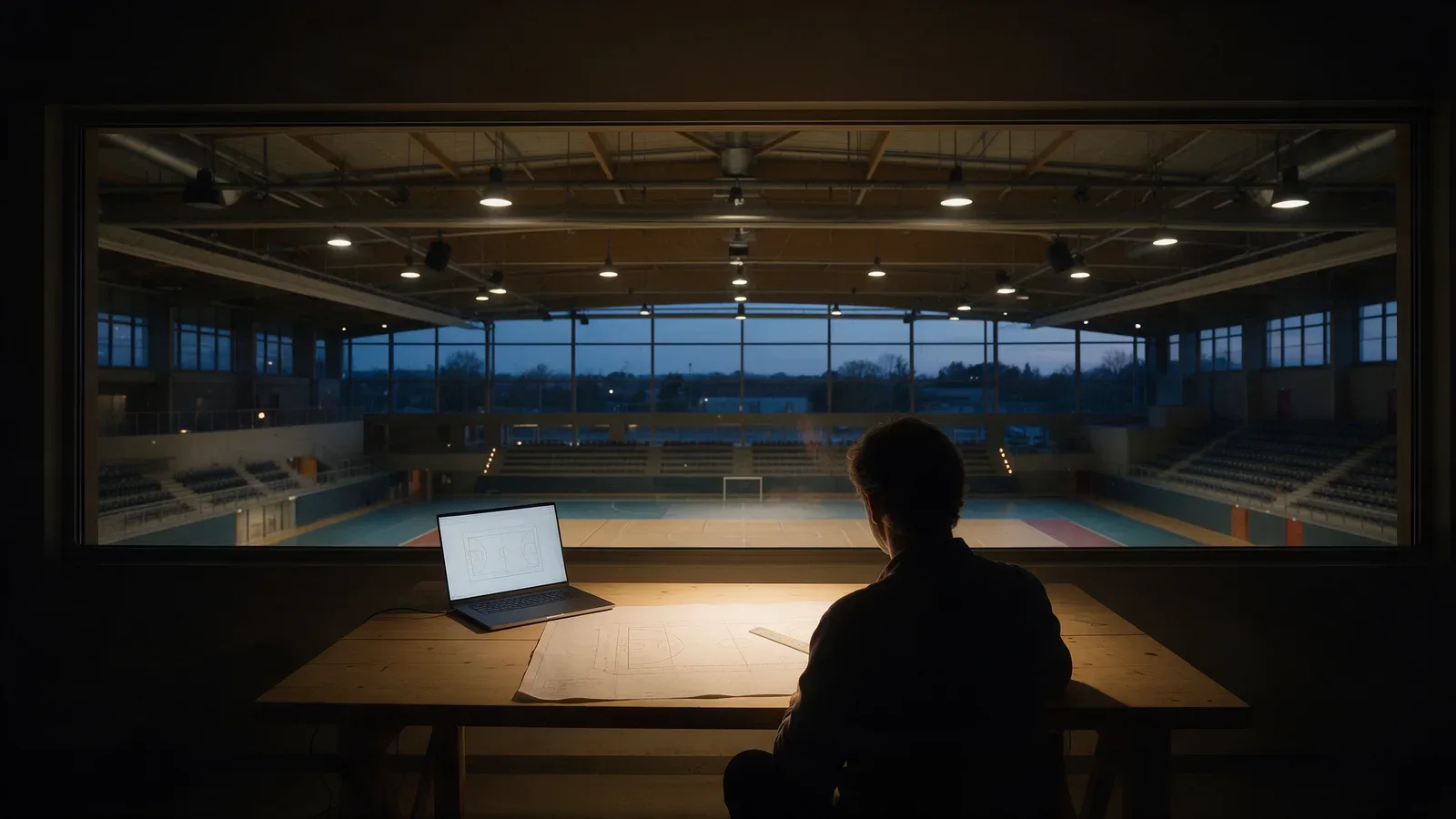
Engineer seated at a desk with a laptop and flat plans, looking through a window towards a sports hall, with no visible photometric data.
Illustrative visualisation — not a completed project or a photometric study.

Visual comfort

Being able to follow the ball, read the court and see other players is central to the experience. Brightness alone does not describe how comfortable a space feels.

The study also considers glare, reflections and the different viewpoints of players, staff and spectators. Those conditions help refine the direction and distribution of the light.

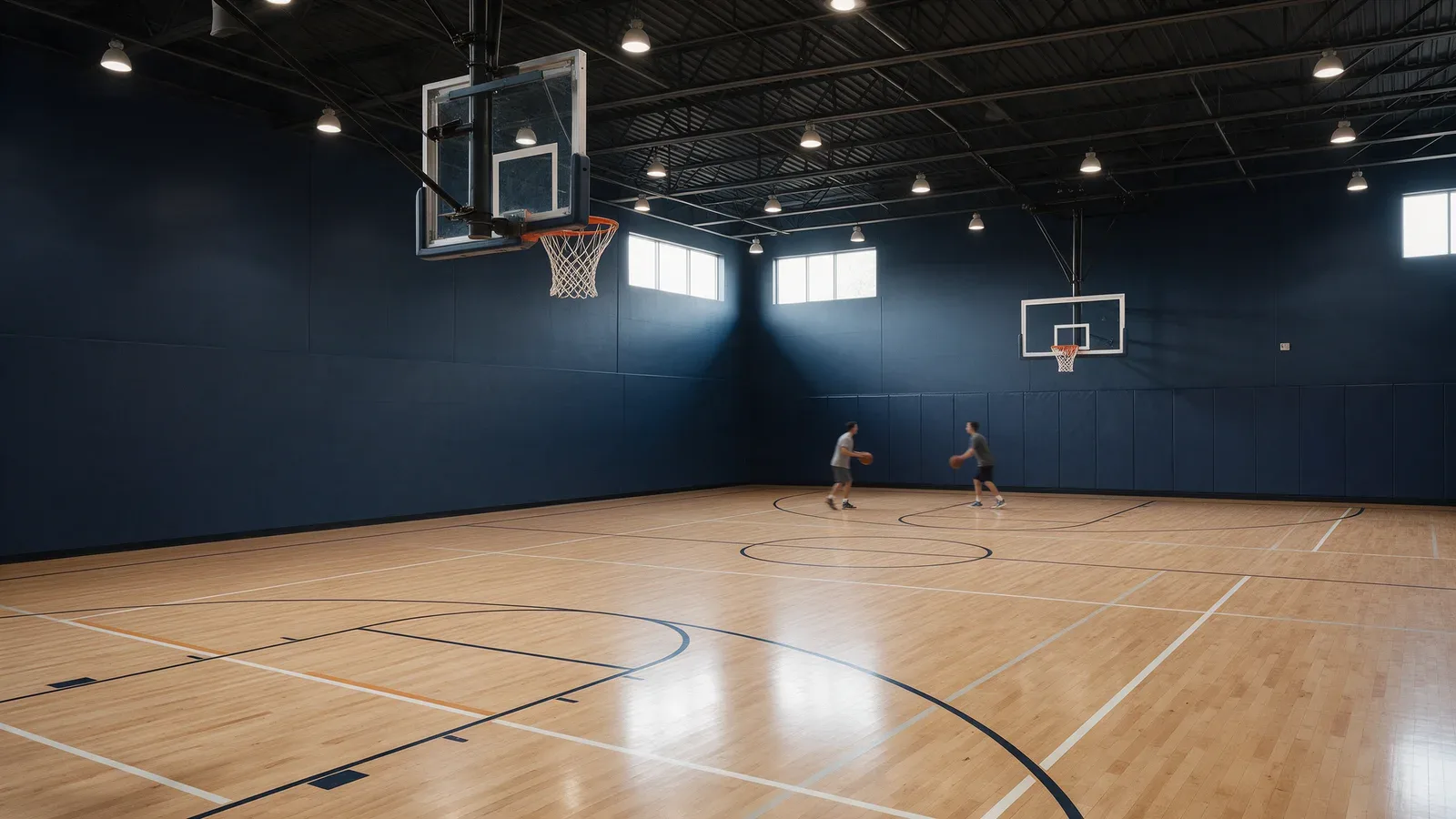
Sideline view of a lit indoor basketball court, with hoops and players in the distance.
Illustrative visualisation — not a completed project or a photometric study.

High efficiency

Once the lighting needs are defined, the installation can be sized around them. The aim is to deliver useful light where the activity requires it, without adding unnecessary power.

Expected light output, operating hours and maintenance needs inform the comparison between solutions. Efficiency is assessed in relation to the use of the facility, not as an isolated product claim.

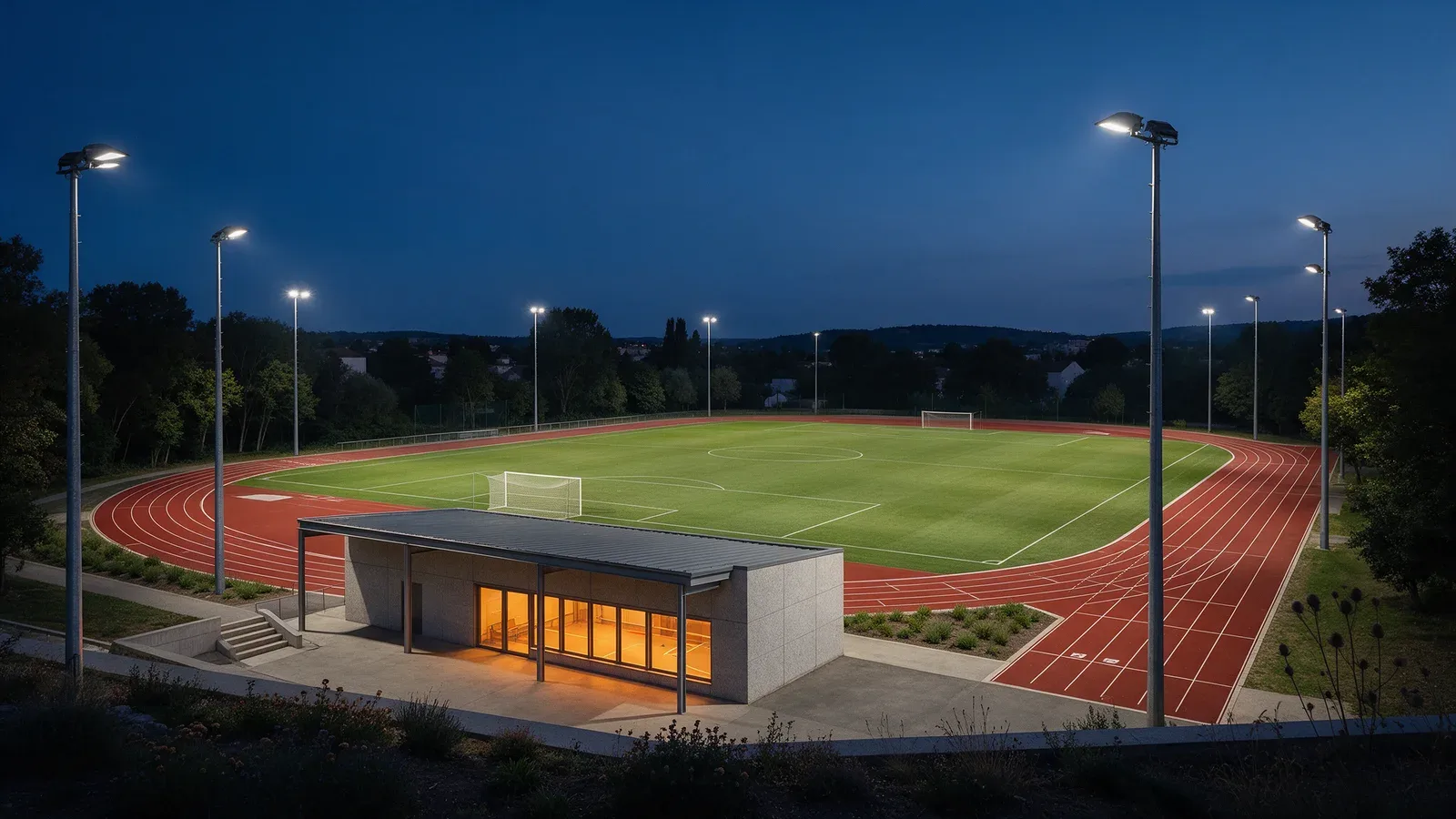
Sports complex with a football pitch, athletics track and small pavilion at blue hour.
Illustrative visualisation — not a completed project or a photometric study.

Your facility.Your project.

Planning a new facility or refurbishment? Gather information about the site, intended uses and existing equipment, then discuss the solutions to explore with Tualuce.

  • The sports and intended uses
  • The site plan and dimensions
  • Existing equipment and constraints
Contact Tualuce
  1. Define the uses

    Set out the sports, activities and areas involved.

  2. Gather the site information

    Prepare plans, dimensions, existing equipment and known constraints.

  3. Present the project to Tualuce

    Share this context with Tualuce to start a professional conversation.

Let’s talk about your facility.

Before discussing your facility.

Which sports can you take into account?

This landing covers 7-a-side and 11-a-side football, futsal, tennis, padel, indoor pools, basketball and athletics. The scope is refined around your facility.

What information differs between a new-build project and a refurbishment?

For a new build, start with the plans, intended uses and site constraints. For a refurbishment, also document existing equipment and mounting positions, along with access and maintenance constraints.

What should we gather before the first conversation?

A site plan, useful dimensions, intended uses and available information about existing equipment make a useful starting point. You can also flag known constraints.

How are lighting levels defined?

They depend on the use, level of play, site and project constraints. A considered definition requires the context to be studied; the diagrams on this page are conceptual and contain no photometric values.

How can we contact Tualuce about a sports project?

The panel below is a local demonstration and does not transmit any data. For a real conversation, use the Tualuce commercial link in your language.

Let’s talk about your facility.

Describe your context to prepare a conversation with Tualuce.

Explore solutions and contact Tualuce
Let’s talk about your facility.

Demonstration only: this panel does not send or store your data.

Optional choice: not needed for your enquiry; simple opt-out at any time. Demonstration only: no choice is transmitted or stored.

Read the privacy notice